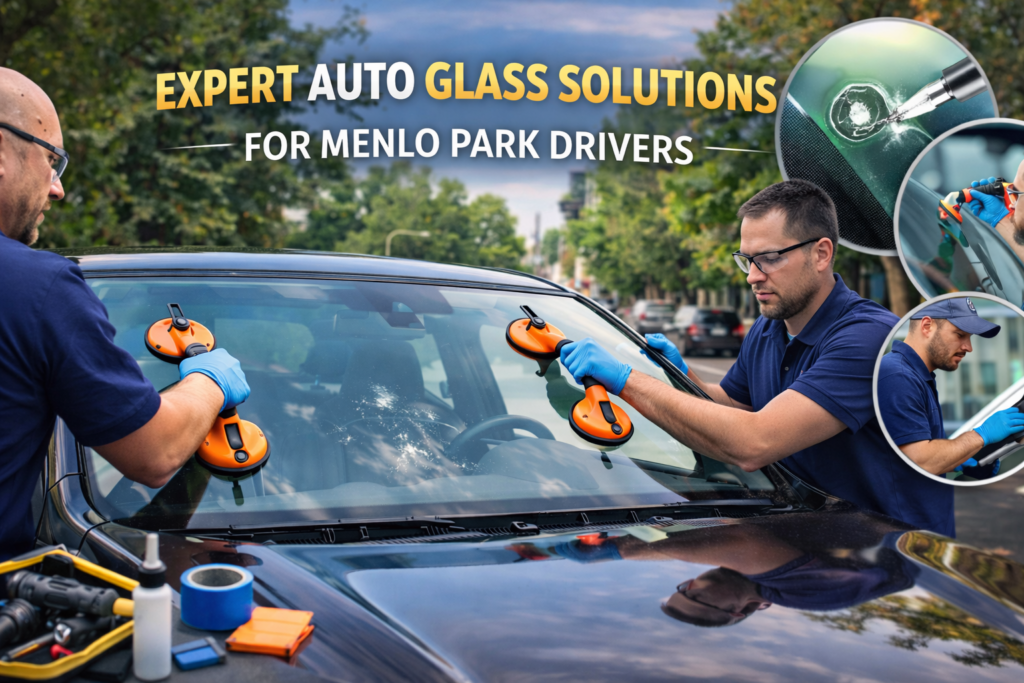
Menlo Park’s position in the heart of Silicon Valley means residents navigate some of the Bay Area’s busiest thoroughfares daily. From Highway 101’s constant traffic flow to El Camino Real’s stop-and-go congestion, local drivers face countless opportunities for windshield damage. A chip from a loose gravel on the Dumbarton Bridge, a crack spreading from University Avenue’s speed bumps, or side glass damage in a parking structure can quickly escalate from minor inconvenience to serious safety concern. Understanding professional auto glass services helps Menlo Park residents address these issues promptly while maintaining the safety features modern vehicles depend upon.
Modern vehicles integrate glass into critical safety systems far beyond simple weather protection. Windshields provide up to 60% of structural strength during rollover accidents, serve as deployment surfaces for passenger airbags, and house cameras and sensors for advanced driver assistance features. When damage occurs, professional repair or replacement becomes essential not just for visibility but for preserving the comprehensive safety engineering that protects you and your passengers during every commute.
The Critical Role of Auto Glass in Vehicle Safety
Laminated windshield construction bonds two glass layers to a plastic interlayer, creating safety glass that holds together during impacts rather than shattering into dangerous projectiles. This design prevents occupant ejection during collisions—a leading cause of fatalities in vehicle accidents. The laminated structure also provides acoustic insulation, UV protection, and the stable surface required for heads-up displays and rain-sensing systems.
During frontal collisions, properly installed windshields prevent dashboard intrusion and maintain passenger compartment integrity. In rollover scenarios, windshields resist roof collapse that would otherwise crush occupants. These protective functions depend entirely on proper installation using correct adhesives, curing procedures, and glass specifications. Substandard installation compromises these life-saving capabilities regardless of glass quality.
Side and rear windows use tempered glass engineered to shatter into small, relatively harmless pieces during breakage. Rapid heating and cooling during manufacturing creates internal stresses providing strength while ensuring safe fragmentation. Some luxury vehicles incorporate laminated side glass for enhanced security, sound insulation, and protection during side-impact collisions. Replacement requires matching original specifications to maintain intended safety characteristics.
Advanced Driver Assistance Systems (ADAS) add complexity to windshield replacement. Forward-facing cameras mounted to windshields enable lane departure warnings, automatic emergency braking, adaptive cruise control, and traffic sign recognition. Even slight camera positioning variations after glass replacement can cause system malfunctions or false alerts. Professional services include precision recalibration ensuring these sophisticated safety systems function exactly as designed.
Evaluating Damage: Repair or Replacement?
Windshield chip repair offers effective solutions for damage smaller than a quarter when cracks haven’t spread beyond three inches. The repair process injects specialized resin into damaged areas under vacuum, bonding with glass and curing to optical clarity under ultraviolet light. Quality repairs restore structural integrity, prevent damage progression, and cost a fraction of replacement expenses while preserving original factory glass.
Repair success depends on multiple factors beyond simple size measurements. Damage location critically affects repair viability—chips directly in driver’s sight lines may not achieve acceptable clarity even when technically repairable. Edge damage compromises structural integrity too severely for safe repair. Multiple chips in close proximity or complex star-pattern breaks often exceed repair capabilities. Professional technicians evaluate all factors, recommending repairs when appropriate but never compromising safety for cost savings.
Replacement becomes necessary when damage exceeds repair parameters or affects critical safety functions. Cracks longer than dollar bill length, damage penetrating both glass layers, or deterioration affecting driver visibility all require replacement. Windshields with extensive pitting from years of sand and debris may warrant replacement during other service opportunities, eliminating progressive visibility degradation that affects driving safety.
Insurance coverage significantly influences repair versus replacement economics. Most comprehensive policies cover chip repairs without deductibles, recognizing that preventing crack propagation costs less than eventual replacement. Replacements typically require deductible payment unless specific zero-deductible glass coverage was purchased. Professional shops handle insurance coordination directly, verifying coverage and managing claims to simplify the process for customers.
Professional Replacement Standards and Procedures
Quality windshield replacement begins with meticulous preparation. Technicians protect vehicle interiors, remove trim components carefully to prevent breakage, and cut adhesive bonds without damaging the pinchweld—the metal frame providing windshield mounting surface. Hasty removal damages pinchweld requiring costly repairs before new glass installation can proceed properly, or worse, creates permanent weak points compromising future installations.
Pinchweld preparation determines long-term installation success. Proper technique removes old adhesive to correct depth, leaving adequate base for new adhesive bonding while maintaining uniform thickness across the entire perimeter. Technicians clean all contaminants that prevent proper adhesive curing, then apply primers matched to specific vehicle paint types and glass specifications. These preparation steps consume time but prove absolutely essential for installations that remain watertight and structurally sound throughout vehicle life.
Glass quality varies significantly across suppliers and price points. Original Equipment Manufacturer (OEM) glass matches factory specifications exactly, ensuring proper fit, optical clarity, and feature integration. Aftermarket glass meeting Department of Transportation standards provides functional alternatives at lower costs, though quality ranges from premium options rivaling OEM to economy choices with acceptable but not exceptional characteristics. An established auto glass shop menlopark explains these differences honestly, helping customers make informed decisions balancing quality expectations with budget realities.
Urethane adhesive application and glass installation require precision timing and technique. Technicians apply adhesive in consistent beads providing specified thickness and complete coverage, then position glass using factory alignment marks and specialized fixtures. Proper installation achieves weathertight seals and structural bonding meeting or exceeding original specifications. Quality shops allow adequate cure time before vehicle release—rushing this critical step creates weak bonds that leak or fail structurally when stressed.
ADAS Calibration: The Essential Final Step
Modern vehicles increasingly depend on camera-based systems requiring precise calibration after windshield replacement. Even millimeter-level variations in camera positioning affect system accuracy, potentially causing false alerts or preventing critical safety interventions. Static calibration uses targets positioned at specific distances and angles, allowing systems to establish reference points. Dynamic calibration requires driving under controlled conditions while systems verify performance against known parameters.
Calibration requirements vary by manufacturer and model year. Some vehicles need only static calibration completed in shop environments. Others require dynamic calibration involving test drives on specific road types at certain speeds. Many need both procedures for complete system verification. Professional auto glass shops invest in manufacturer-specific calibration equipment and training, ensuring compliance with exact procedures required for each vehicle.
Skipping or improperly performing ADAS calibration creates dangerous situations despite appearing functional. Systems may fail to detect obstacles, provide incorrect distance warnings, or activate emergency braking unnecessarily. These malfunctions compromise the safety benefits that prompted expensive system purchases originally. Reputable shops never skip calibration on equipped vehicles—this step is non-negotiable for proper service regardless of cost implications.
Documentation of calibration procedures protects vehicle values and provides service records important for warranty claims or resale. Quality shops provide detailed receipts specifying calibration procedures performed, equipment used, and verification of proper system function. This documentation proves particularly valuable for luxury vehicles where proper maintenance records significantly affect resale values.
The Menlo Park Advantage: Local Expertise
Menlo Park’s unique position in Silicon Valley means local shops regularly service high-end vehicles with sophisticated glass and electronic systems. This exposure develops expertise with luxury brands, advanced features, and specialty glass types that shops in less affluent areas rarely encounter. Technicians gain experience with panoramic sunroofs, acoustic windshields, heated glass, and integrated antenna systems requiring specialized knowledge for proper replacement.
Local familiarity with regional driving conditions informs service recommendations. Highway 101 generates rock chips from commercial truck traffic. The Dumbarton Bridge crossing exposes windshields to wind-blown debris and extreme temperature variations. Foggy mornings create condensation stress on already-compromised glass. Experienced local technicians understand these factors, advising customers on repair urgency and preventive measures specific to Menlo Park driving realities.
Mobile service capabilities prove especially valuable for busy Silicon Valley professionals. Many shops offer on-site service at homes or workplaces, bringing shop-quality equipment and procedures to customer locations. Technicians arrive prepared for complete replacements including ADAS calibration when required, eliminating shop visits and minimizing disruption to demanding work schedules.
Established local presence ensures shops remain available for warranty service, follow-up questions, or future needs. National chains or distant providers may discontinue local operations, leaving customers with warranty coverage they cannot access. Local businesses with years of community presence demonstrate stability that protects your investment beyond initial installation.
Navigating Insurance Coverage and Claims
Comprehensive auto insurance typically covers glass damage from road debris, weather events, or vandalism. Understanding your specific policy provisions maximizes benefits while minimizing out-of-pocket expenses. Many insurers waive deductibles for windshield repairs, recognizing that early intervention prevents expensive replacements. Some policies include zero-deductible glass coverage even for replacements—particularly common in states with specific glass coverage requirements.
Professional auto glass shops handle insurance claims as routine business, contacting carriers directly to verify coverage, obtain necessary approvals, and submit documentation. This service eliminates customer involvement in claims bureaucracy—shops manage all insurer communication and paperwork. Customers typically need only provide insurance information and authorize the work, with shops handling everything else.
California law protects consumer choice in auto glass services. Despite insurer recommendations for specific providers, you maintain legal rights to choose any licensed shop regardless of insurance company preferences. While insurance-preferred shops sometimes deliver excellent service, selecting shops based on reputation, expertise, and customer reviews rather than solely insurance relationships often yields superior experiences and outcomes.
OEM versus aftermarket glass sometimes creates insurance discussions. Insurers naturally prefer lower-cost alternatives reducing claim expenses. However, customers can typically upgrade to OEM glass and pay cost differences when insurers approve only aftermarket options. Understanding these choices before authorizing work prevents surprises and ensures you receive glass meeting your quality standards and vehicle value protection goals.
Preventive Care and Damage Minimization
Regular windshield inspection identifies minor damage before expansion into major problems. Check for small chips or cracks monthly, particularly after highway driving or following commercial vehicles. Early detection enables repair while damage remains within repair parameters, preserving original factory glass while saving replacement costs.
Proper cleaning techniques maintain visibility without causing damage. Use automotive glass cleaners and microfiber cloths rather than household products and paper towels that may scratch. Replace wiper blades at first signs of streaking—worn blades scratch glass during operation. Avoid abrasive cleaners that damage special coatings like rain-repellent treatments or defrost elements.
Parking strategies minimize exposure to damage sources. Choose covered parking protecting glass from falling objects, tree debris, and hail when available. Avoid parking under trees during trimming operations or near construction sites generating airborne debris. In parking structures, select end spots reducing door-ding risks to side windows.
Driving habits significantly affect windshield damage frequency. Increase following distances, especially behind trucks carrying loose materials. Avoid driving directly behind gravel haulers or dump trucks on highways. When debris impacts are visible ahead, slow down and increase spacing rather than maintaining speed through debris fields. These defensive practices dramatically reduce damage incidents.
Recognizing Quality Service Providers
Professional certifications indicate technical competence and industry commitment. Auto Glass Safety Council (AGSC) certification demonstrates technician training in proper installation procedures. National Glass Association (NGA) membership suggests adherence to industry best practices. Manufacturer-specific certifications for brands like Tesla, BMW, or Mercedes indicate expertise with those vehicles’ unique requirements and advanced systems.
Comprehensive warranties reveal confidence in workmanship and materials. Lifetime warranties covering both materials and labor for duration of ownership demonstrate quality commitment. Limited warranties or short coverage periods may signal corners cut during installation or inferior materials used. Understanding warranty terms before authorizing work protects you if problems develop later.
Facility quality indicates overall operation standards. Clean, organized shops with proper equipment for adhesive application, glass positioning, and ADAS calibration demonstrate professional capability. Mobile service units should carry equivalent equipment ensuring field installations match shop quality standards. Tool investment reflects commitment to proper procedures rather than shortcuts compromising results.
Communication quality separates exceptional service from adequate work. Quality shops thoroughly explain damage assessments, discuss repair versus replacement rationale, and review insurance implications. They provide accurate timelines and detailed cost breakdowns before starting work. During service, they explain cure time requirements and any usage restrictions. This transparency builds trust while ensuring customers understand exactly what they’re receiving.
Long-Term Value Through Proper Maintenance
Windshield longevity depends partly on proper care and maintenance. Address small chips immediately before temperature changes or road vibrations cause crack propagation. Even minor damage weakens glass structure, making it more susceptible to additional damage from subsequent impacts or stress.
Climate control practices protect glass from thermal stress potentially causing damage spread. Avoid extreme temperature changes like maximum defrost settings on frozen windshields. Don’t pour hot water to melt ice—thermal shock from rapid temperature change can propagate existing chips into cracks. Gradual temperature changes prove gentler on glass, especially when minor damage exists.
Regular professional inspections during routine vehicle maintenance identify developing problems early. Many auto glass shops offer free damage assessments, checking for chips, cracks, or seal deterioration requiring attention. Early detection allows scheduled repairs rather than emergency replacements when damage suddenly expands beyond repair parameters.
Documentation of all glass service maintains vehicle history valuable during resale. Receipts showing professional OEM glass installation with proper ADAS calibration reassure potential buyers that safety systems function correctly. This documentation particularly benefits luxury vehicle resale where comprehensive maintenance records significantly affect values and buyer confidence.
Your vehicle’s glass systems protect you throughout every Menlo Park commute. Professional service ensures these critical safety components perform exactly as engineers designed them.
Frequently Asked Questions
How long after windshield replacement can I drive my car? Installation takes 1-2 hours, but adhesive cure time before safe driving varies by product and conditions—typically 1-4 additional hours. Technicians provide specific safe-to-drive times based on weather, adhesive type, and your vehicle’s requirements. Never rush this critical curing period.
Will windshield replacement affect my car’s resale value? Professional replacement using OEM glass maintains vehicle value. Proper installation with documentation actually benefits resale by demonstrating maintenance diligence. Substandard work or aftermarket glass may slightly reduce values, particularly for luxury vehicles where buyers expect original components.
Can small chips really spread into large cracks? Yes, temperature changes, road vibrations, and additional impacts can cause chips to crack rapidly—sometimes within hours. California’s temperature variations between morning fog and afternoon sun create conditions promoting crack propagation. Addressing chips immediately prevents this progression.
Do I need to inform my insurance company before getting glass work? Most shops handle insurance notification as part of their service. However, reviewing your policy or contacting your agent beforehand clarifies coverage and deductible requirements, helping you understand financial obligations before authorizing work.
How do I know if my car has ADAS requiring calibration? Features like lane departure warning, adaptive cruise control, automatic emergency braking, or traffic sign recognition indicate ADAS presence. Technicians assess your specific vehicle and inform you of calibration requirements. When in doubt, calibration ensures proper system function and safety.