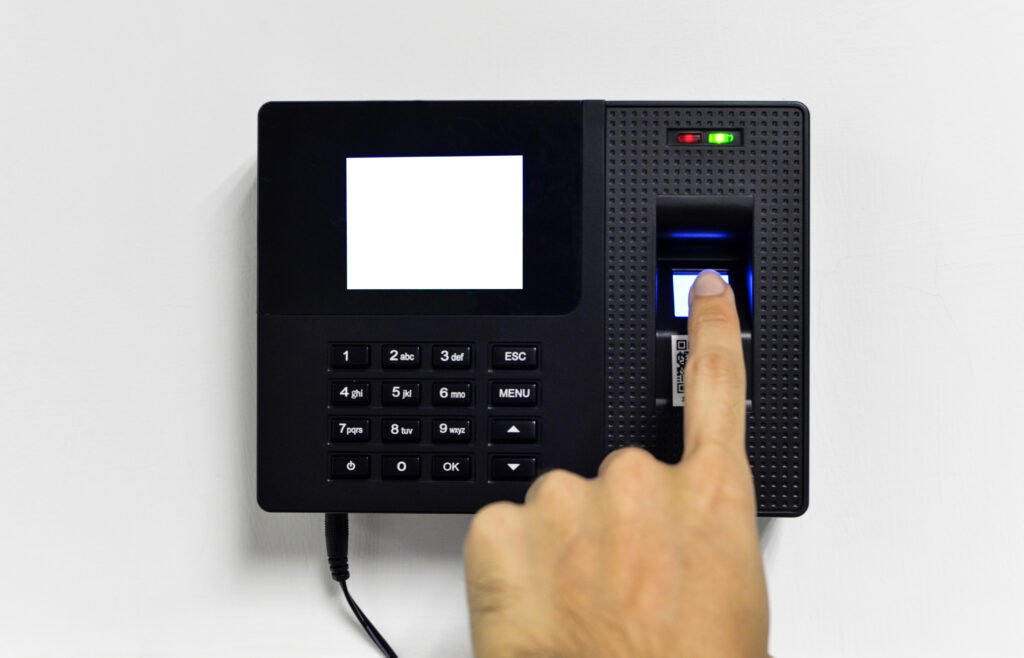
Introduction: The Rise of Biometric Authentication
In an increasingly digital world where data breaches and identity theft make daily headlines, the quest for secure, reliable authentication has never been more critical. Passwords, once the cornerstone of digital security, are proving to be a fragile defense. They can be forgotten, stolen, or cracked. This vulnerability has propelled biometric authentication from a sci-fi concept to a mainstream security essential, with the Biometric Finger Print Scanner leading this revolution.
A fingerprint scanner is no longer just a tool for law enforcement or high-security government facilities. Today, it is an integral component of everyday life—unlocking smartphones, authorizing payments, logging into corporate networks, and clocking employees in and out of work. This widespread adoption is driven by one undeniable fact: your fingerprint is a unique key that you always carry, cannot lose, and is incredibly difficult to forge.
This comprehensive guide will explore the technology behind fingerprint scanners, their diverse applications, key considerations for implementation, and why choosing an expert partner like TheNextGen Technologies is crucial for leveraging this technology to its full potential.
Understanding the Biometric Finger Print Scanner
At its core, a Biometric Finger Print Scanner is a device that captures a digital image of a fingerprint pattern. This image is not stored as a simple picture but is converted into a unique mathematical template through a process called minutiae extraction. The scanner identifies specific points where fingerprint ridges end or split (ridge endings and bifurcations). The spatial relationship between these minutiae points creates a digital blueprint that is distinct for every individual.
The process involves three key stages:
- Enrollment: The user’s fingerprint is scanned for the first time, and the unique template is created and stored in a database.
- Verification (1:1 Match): The system confirms an individual’s identity by comparing a live scan against their pre-stored template. “Is this person who they claim to be?”
- Identification (1:N Match): The system identifies an individual by comparing a live scan against all templates in a database. “Who is this person?”
This technology offers a powerful combination of security, convenience, and accountability, making it superior to traditional methods like keys, cards, or passwords.
The Technology Behind a Biometric Finger Print Device
Not all fingerprint readers are created equal. The performance, accuracy, and security of a Biometric Finger Print Device depend heavily on the sensor technology it employs. The three primary types are:
1. Optical Scanners
The oldest and most common type, optical scanners work like a miniature digital camera. They capture a 2D image of the fingertip by shining a bright light on it. While cost-effective and reliable for many applications, they can be fooled by high-resolution photographs or prints and may struggle with very dry, wet, or worn fingers.
2. Capacitive Scanners
Found in most modern smartphones and high-security applications, capacitive scanners are more advanced. They use an array of tiny capacitor circuits to measure the electrical charge difference between the ridges (touching the sensor) and valleys (not touching) of your fingerprint. This creates a highly accurate map and is much harder to spoof than an optical scanner. They are generally more compact and power-efficient.
3. Ultrasonic Scanners
This is the cutting edge of fingerprint technology. Ultrasonic scanners use high-frequency sound waves to penetrate the outer layer of your skin and map the unique 3D contours of your fingertip, including the live tissue beneath. This makes them extremely secure, resistant to spoofing, and effective even with dirty, wet, or oily fingers.
Key Performance Metrics:
When evaluating a device, look for:
- False Acceptance Rate (FAR): How often it incorrectly accepts an unauthorized user. (Should be very low).
- False Rejection Rate (FRR): How often it incorrectly rejects an authorized user. (Balanced against FAR).
- Template Size: Smaller templates are faster to process and require less storage.
- Liveness Detection: Advanced feature that ensures the fingerprint comes from a live human finger, not a silicone mold or printed image.
Applications: Where Fingerprint Technology is Transforming Industries
The versatility of fingerprint devices has led to their deployment across a vast spectrum of sectors:
- Enterprise Security & Access Control: Securing physical doors to server rooms, data centers, and executive offices, as well as logical access to computers, networks, and sensitive applications.
- Time & Attendance Management: Eliminating “buddy punching” and providing irrefutable proof of employee presence, streamlining payroll, and increasing workforce accountability.
- Law Enforcement & Civil ID: Used by agencies worldwide for criminal identification, background checks, and national ID programs (like India’s Aadhaar), ensuring secure and unique citizen identification.
- Border Control & Immigration: Speeding up passenger processing at airports while enhancing security by verifying identities against watchlists and passport data.
- Healthcare: Protecting sensitive patient health records (PHI) and ensuring only authorized medical personnel can access medication cabinets or patient data.
- Banking & Finance: Securing ATM transactions, authorizing high-value bank transfers, and providing secure login for mobile banking apps.
Implementing a Fingerprint System: A Strategic Guide
Successfully deploying a biometric system requires careful planning beyond simply purchasing hardware.
- Define Your Objectives: Start by identifying the core problem. Is it security (preventing unauthorized access), efficiency (speeding up logins), or accountability (accurate time tracking)?
- Assess the Environment: Will the scanners be used indoors or outdoors? In a dry office or a humid, dirty industrial setting? This determines the required durability (IP rating) and sensor type.
- Consider Scale & Integration: How many users will the system support? Does it need to integrate with existing software like your HR platform, access control system, or custom database? Ensure the chosen solution has a robust SDK (Software Development Kit) and API for seamless integration.
- Prioritize Data Security & Privacy: The fingerprint template is the critical asset. How and where is it stored? Best practice is to store templates encrypted on a centralized, secure server or on a dedicated smart card held by the user—not on the individual scanner device. Be transparent with users about data usage and comply with relevant regulations (like GDPR).
- Plan for User Management: A smooth enrollment process is vital for user adoption. Plan for training, managing exceptions (e.g., users with unreadable prints), and a straightforward process for template updates or deletions.
TheNextGen Technologies: Your Partner in Biometric Innovation
Navigating the complex landscape of biometric technology can be daunting. This is where expertise matters. TheNextGen Technologies has established itself as a leader in providing cutting-edge, reliable biometric solutions tailored to the unique needs of businesses and institutions.
Unlike generic suppliers, TheNextGen Technologies takes a consultative, solutions-based approach. We understand that a fingerprint scanner is not just a piece of hardware; it is a critical component of your security and operational infrastructure.
Why Partner with TheNextGen Technologies?
- Expert Consultation & System Design: Our team works with you to analyze your workflow and security challenges, recommending the optimal technology (optical, capacitive, ultrasonic) and system architecture for your specific use case.
- Premium Hardware Portfolio: We provide access to industry-leading devices from top global manufacturers, ensuring high accuracy, durability, and liveness detection to prevent spoofing.
- Seamless Integration & Custom Development: Our technical experts ensure the biometric system integrates flawlessly with your existing access control, time & attendance, or custom enterprise software. We can develop tailored applications using device SDKs.
- End-to-End Project Management: From initial site assessment and installation to comprehensive user training and ongoing technical support, we manage the entire project lifecycle.
- Commitment to Security & Compliance: We advise on best practices for template storage, data protection, and system configuration to help you maintain the highest security standards and regulatory compliance.
Conclusion: Building a Future-Proof Security Foundation
The Biometric Finger Print Device has evolved from a niche tool to a foundational technology for modern security and efficiency. Its ability to provide a unique, convenient, and secure link between identity and action is unmatched. Whether you are looking to secure your facilities, streamline operations, or enhance customer trust, fingerprint biometrics offers a powerful solution.
The key to success lies in strategic implementation—choosing the right technology for the right environment and ensuring it is integrated into a secure, manageable system. By partnering with an experienced and innovative provider like TheNextGen Technologies, you move beyond purchasing a product to investing in a partnership. We provide the expertise, quality, and support to ensure your biometric investment delivers tangible, long-term value, protecting your assets and empowering your operations today and into the future.
To explore how advanced biometric solutions can transform your organization’s security and efficiency, visit thenextgentechnologies.com.
Frequently Asked Questions (FAQs)
1. Is my fingerprint data safe? Can it be stolen or recreated?
With modern systems, your actual fingerprint image is not stored. Instead, a secure mathematical template (a set of numbers representing unique minutiae points) is created. This template is typically encrypted. It is nearly impossible to reverse-engineer a fingerprint image from this template. Leading devices also feature liveness detection, preventing the use of fake fingers or photographs.
2. What if my finger is injured, wet, or dirty? Will I be locked out?
High-quality scanners, especially capacitive and ultrasonic models, are designed to handle common challenges. For critical applications, best practice is to enroll two or three fingers (e.g., both index fingers and a thumb). This provides a backup if one finger is temporarily unreadable. Some systems also allow for fallback authentication methods like a PIN code.
3. How does a fingerprint system for 500 employees differ from one for 5?
Scale impacts several factors. For large deployments, centralized database management, network performance, and system redundancy become critical. The software must efficiently handle searching a large database (for 1:N identification). Enterprise systems also offer advanced features like hierarchical administration, detailed audit logs, and integration with HR systems for automated user onboarding/offboarding.
4. Are fingerprint scanners hygienic, especially in a post-pandemic world?
Yes. Modern scanners often use durable, anti-microbial coatings on the sensor surface. Since the user only touches a small, smooth plate (unlike a shared keypad), the risk of cross-contamination is lower. Many organizations supplement this with standard cleaning protocols. Contactless options like facial recognition are also available for environments where this is a paramount concern.
5. What is the typical lifespan and maintenance required for a fingerprint scanner?
A high-quality commercial scanner can last 5-7 years or more with heavy use. Maintenance is generally minimal: periodic cleaning of the sensor plate with a soft, dry cloth and keeping the device’s firmware updated. The primary consideration is technological obsolescence; choosing a provider like TheNextGen Technologies ensures you have access to support, spare parts, and upgrade paths as technology advances.