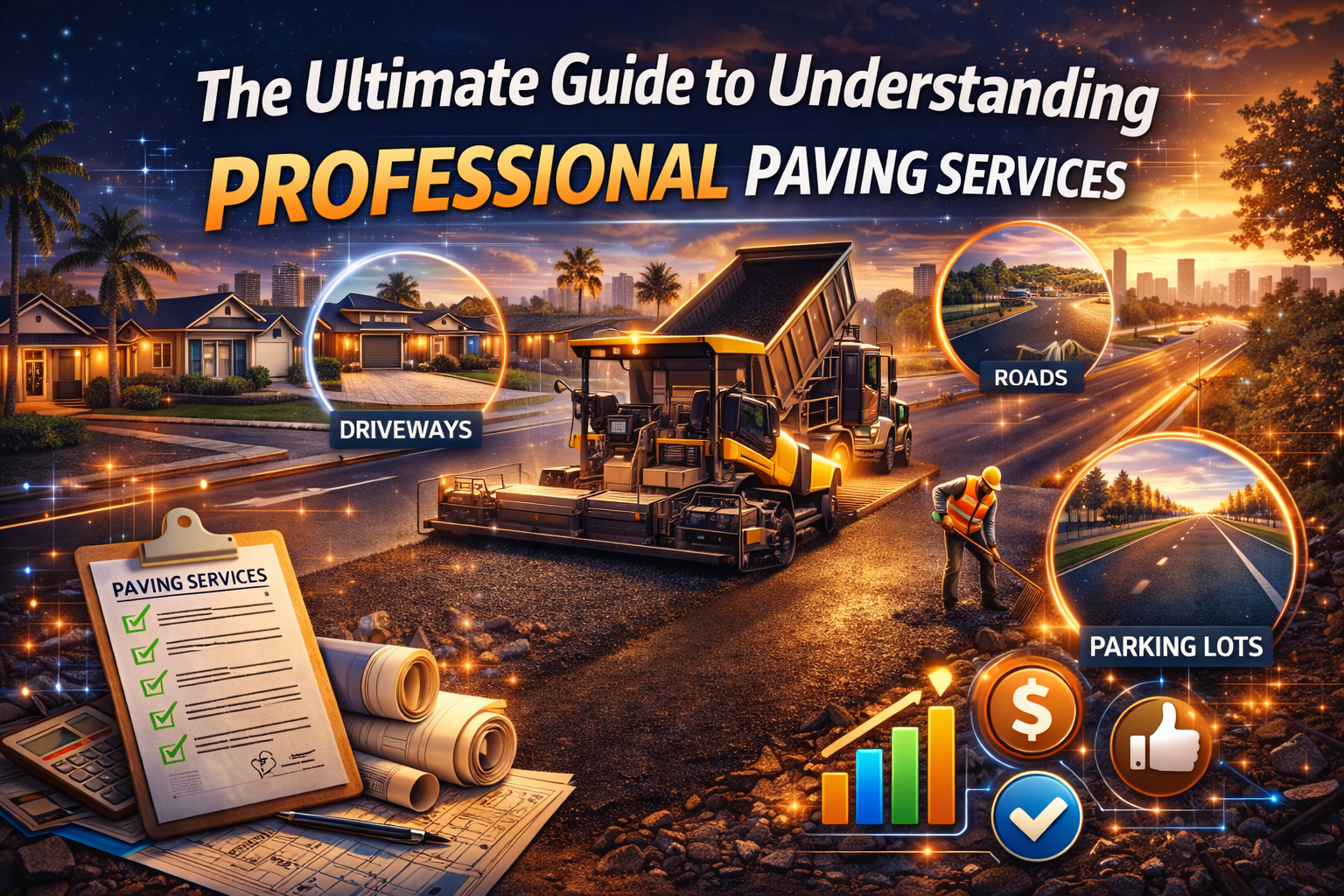
Paving plays a crucial role in shaping the functionality and appearance of both residential and commercial properties. From smooth driveways to well-structured parking lots and roadways, professionally paved surfaces offer durability, safety, and visual appeal. While many people use paved surfaces every day, few truly understand the process, materials, and benefits behind them.
This guide explores the essentials of professional paving, answering common questions and providing valuable insights into how paving enhances properties and infrastructure.
What Is Professional Paving?
Professional paving refers to the process of constructing durable surfaces using materials like asphalt, concrete, or interlocking pavers. These surfaces are designed to handle traffic, weather conditions, and long-term wear while maintaining structural integrity.
Paving is not just about laying material on the ground. It involves careful planning, proper preparation, and precise execution. Each stage contributes to the final result, ensuring that the surface remains stable and functional for years.
Common Areas Where Paving Is Used
Paving services are used in a wide range of applications, including:
- Residential driveways
- Walkways and pathways
- Parking lots
- Roads and streets
- Patios and outdoor living spaces
Each of these areas has unique requirements, which is why professional expertise is essential to achieve the best results.
The Importance of Proper Site Preparation
One of the most critical aspects of paving is site preparation. Without a strong foundation, even the highest-quality materials can fail over time.
The preparation process typically includes clearing debris, removing old surfaces, and grading the land. Grading ensures proper water drainage, preventing water from pooling and causing damage. A well-prepared base provides the stability needed to support the surface above it.
Types of Paving Materials
Choosing the right material is an important part of any paving project. Each option has its own characteristics and advantages.
Asphalt
Asphalt is one of the most popular choices for paving. It is flexible, durable, and well-suited for areas with changing weather conditions. Its smooth finish also makes it ideal for driveways and roads.
Concrete
Concrete is known for its strength and long lifespan. It is often used in areas that require heavy-duty performance, such as sidewalks and commercial spaces.
Interlocking Pavers
Pavers are commonly used for decorative purposes. They come in various shapes, colors, and patterns, making them perfect for enhancing outdoor aesthetics.
Gravel
Gravel is a simpler option that works well for temporary or rural surfaces. While it may not offer the same durability as asphalt or concrete, it is easy to install and maintain.
How the Paving Process Works
Understanding the paving process helps property owners appreciate the level of detail involved in creating a long-lasting surface.
1. Assessment and Planning
The first step involves evaluating the site and determining the best approach. Factors such as soil condition, drainage, and usage requirements are considered.
2. Excavation and Grading
The area is cleared and leveled to create a stable base. Proper grading ensures that water flows away from the surface.
3. Base Layer Installation
A strong base layer, usually made of crushed stone or aggregate, is installed and compacted. This layer provides support and prevents shifting.
4. Material Application
The chosen paving material is applied evenly across the surface. Specialized equipment is used to ensure accuracy and consistency.
5. Compaction and Finishing
The surface is compacted to increase strength and durability. Finishing touches are added to achieve a smooth and polished look.
Benefits of Professional Paving
Investing in professional paving offers numerous advantages:
Improved Safety
Smooth, even surfaces reduce the risk of accidents caused by potholes or uneven ground.
Enhanced Appearance
Well-paved areas improve the overall look of a property, creating a clean and organized environment.
Increased Durability
Properly installed pavement can withstand heavy use and harsh weather conditions.
Better Drainage
Professional paving ensures that water is directed away from the surface, preventing damage and erosion.
How Long Does Pavement Last?
The lifespan of a paved surface depends on several factors, including the material used, installation quality, and maintenance practices. Asphalt surfaces can last for decades when properly maintained, while concrete surfaces often last even longer.
Regular maintenance plays a key role in extending the life of pavement.
Essential Maintenance Tips
To keep paved surfaces in excellent condition, consider the following practices:
- Sealcoating asphalt to protect against weather and wear
- Filling cracks early to prevent further damage
- Cleaning surfaces to remove debris and stains
- Ensuring proper drainage to avoid water-related issues
Routine maintenance not only preserves the appearance of the surface but also prevents costly repairs in the future.
Signs That Paving or Repairs Are Needed
Over time, paved surfaces may show signs of wear and tear. Recognizing these signs early can help prevent more serious problems.
Common indicators include:
- Cracks or potholes
- Uneven or sinking areas
- Water pooling after rainfall
- Fading or worn-out surfaces
Addressing these issues promptly helps maintain safety and functionality.
The Role of Drainage in Paving
Drainage is a crucial element in any paving project. Without proper drainage, water can seep into the surface and weaken its structure. This can lead to cracks, potholes, and other forms of damage.
Professional paving ensures that the surface is designed with the correct slope and drainage system to prevent these issues.
Modern Trends in Paving
Today’s paving industry is evolving with new techniques and materials that focus on sustainability and efficiency. Permeable paving, for example, allows water to pass through the surface, reducing runoff and promoting environmental benefits.
Warm-mix asphalt is another innovation that reduces energy consumption during production while maintaining performance.
Choosing the Right Expertise
Working with experienced professionals ensures that every aspect of the paving process is handled correctly. From preparation to finishing, skilled contractors bring the knowledge and tools needed to deliver high-quality results.
For those looking to explore professional paving solutions in more detail, you can learn more through this trusted resource:
Final Thoughts
Paving is an essential component of modern infrastructure and property development. It combines technical expertise, quality materials, and careful planning to create surfaces that are both functional and visually appealing.
By understanding the paving process, materials, and maintenance practices, property owners can make informed decisions and ensure long-lasting results. Whether it’s a driveway, walkway, or large commercial space, professional paving delivers value, durability, and peace of mind.